Solar in South Florida: What Homeowners Should Know Before Getting a Quote
Start with the roof, the sunlight, and the electric bill — before anyone starts selling you panels.
Solar should start with your home, not the equipment
A good solar quote should feel less like being sold to and more like someone explained the hidden potential of your house back to you. The roof, the utility bill, and the weather are all connected. If one of those pieces is ignored, the proposal may look nice on paper and still be wrong for the home.
This is the article to read before the first appointment. It will not tell you to go solar. It will tell you how to know whether your home is ready, what questions matter, and which promises should make you slow down.
Before anyone talks about panel counts, monthly payments, or limited-time incentives, there are three practical questions that matter more: does your roof receive strong sunlight, is the roof young enough for a long-term solar investment, and is your electric usage high enough for solar to make sense?
In South Florida, a good lower bound is around $250 per month in electricity usage. That does not mean a smaller bill can never work, but that is often where the math gets easier because the home has enough energy usage to offset.
Good fit to explore now
- FPL bill is often around $250/month or higher.
- Roof has enough useful life left to support a long-term system.
- Sun-exposed roof planes can carry a meaningful array.
- You want lower bills, backup power, or both.
Maybe not yet
- Your roof is close to replacement and should be handled first.
- Your FPL bill is low enough that the savings case is tight.
- Heavy shade leaves too little productive roof area.
- You need the tax-credit math to work without checking current rules.
Is your home solar-ready?
Three things worth having in mind before talking to an installer.
- 1Roof age and conditionYour roof still has 15 years or more to go? It's ready for solar. If it has fewer than ~5 years left, consider replacing it first. Anywhere in between, worth looking into whether the savings will outweigh the cost of reinstalling.
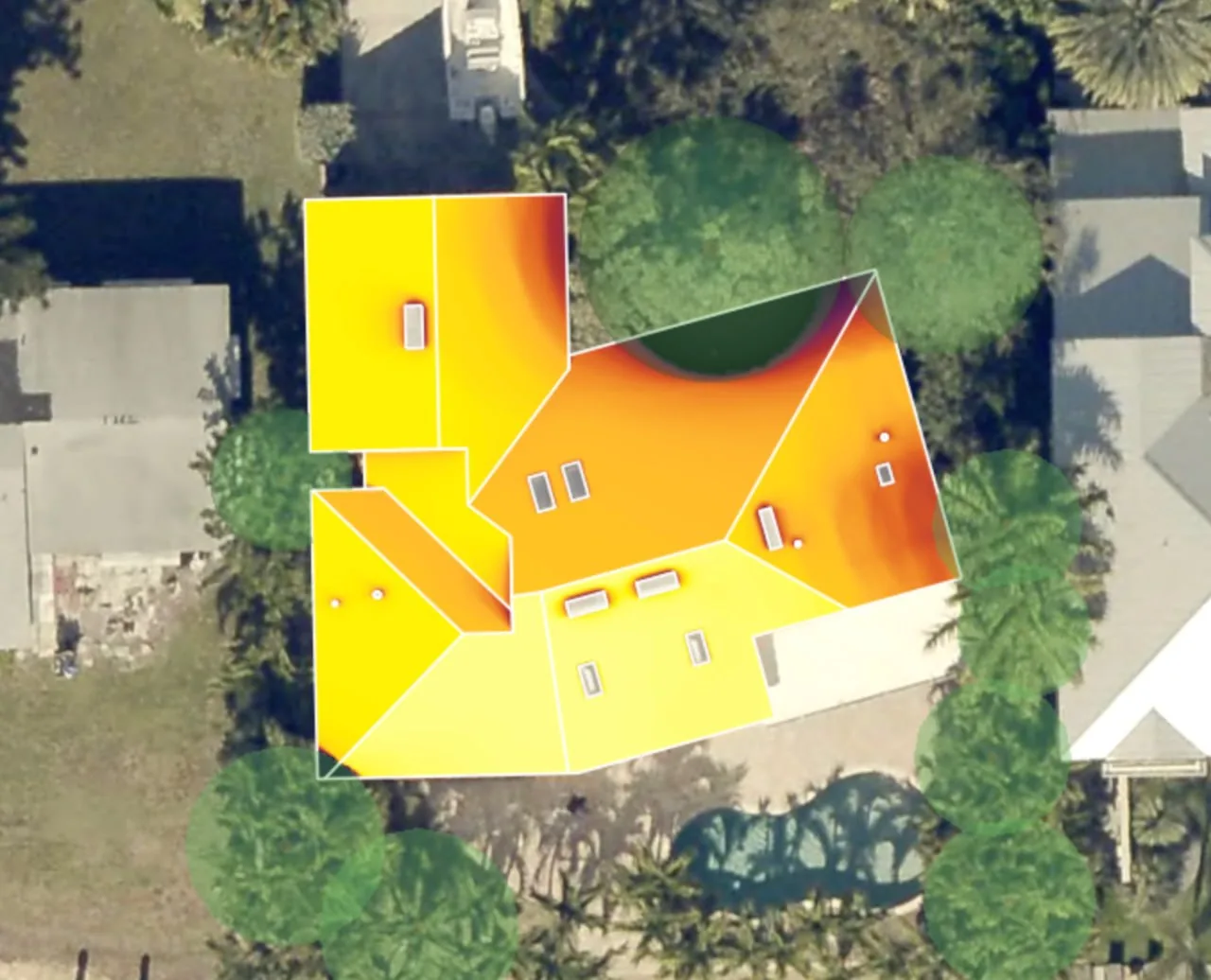
- 2Sunlight hits different depending on the directionSouth roofs get the most sunlight, North intake is about 30% lower, while East, West and flat roofs sit somewhere in the middle. A good design studies which roofs get the most year-round sunlight, accounting for shade, orientation, and the seasonal sun path.
- 3Electric usage worth offsettingRoughly $250+/month in FPL bills is often where the math gets easier. Lower can still work — the savings case just needs a more careful look.
Roof matters more than panel brand
If the roof is old, wait. If the roof is new, let's go. Solar panels can last for decades, so installing them on a roof that may need replacement soon can create avoidable cost and hassle — pulling and resetting a solar array adds cost to your reroof. How much depends on your specific case, so it's worth bringing up this topic in conversation with the installer to best assess the savings vs the cost.
Roof irradiance matters too. The orientation of your house and the amount of trees around it affect the exposure to the sun. South-facing planes produce the most energy in Florida; east and west are close behind; north should usually be the last pick. A good design studies which roof planes receive the most sunlight throughout the year, accounting for shade, orientation, and the seasonal movement of the sun.
Solar alone is not backup power
This is the single most common surprise we hear from homeowners after a hurricane: a standard grid-tied solar system without batteries shuts off during a grid outage. That is not a defect. It protects utility line workers from dangerous backfeed while they are restoring service.
If you want the home to keep running during an outage, batteries are the missing piece. They allow the house to safely become a microgrid that the panels can recharge during the day.
Panels only
- Lower upfront cost
- Reduces monthly bill via net metering
- Shuts off during a grid outage
- No protection during hurricane season
Panels + battery
- Keeps home running through outages
- Recharges from sun, no fuel runs
- Pairs with FPL time-of-use rates
- Higher upfront cost
South Florida is its own solar market
South Florida installations are often large, must be hurricane resistant, and should be designed with batteries in mind. Roof type (tile vs. metal vs. shingle), county permitting, FPL interconnection, and long-term support all matter. Working with a solar company that is local to you and has a consistent record of positive feedback should matter at least as much as the price.
You can see that in our install archive: projects like the Delray Beach solar + battery install combine tile-roof mounting, battery backup, and FPL interconnection details that only show up when the design is built around the actual house.
The best question to ask is not just who is cheapest. It is how easy will it be to reach someone high up on the team if something needs attention seven years from now? You may be chasing the best deal today, but solar is a 25-year relationship; a $1,000 difference is a poor reason to pick a company that may not pick up the phone in 2033.
What to look for in reviews
Look for reviews that specifically speak about service and communication with the solar team. Reliable support is worth twice as much as a fast installation or a cheap deal.
Be direct about incentives
Be careful with anyone still promising the 30% federal Residential Clean Energy Credit on a brand-new 2026 installation. The IRS 2025 Form 5695 instructions say residential clean energy credits cannot be claimed for expenditures made after December 31, 2025, and describe 2022 through 2025 as the 30% credit period.
Solar can still make sense. The math just needs to be honest. A trustworthy proposal cites the purchase and installation timing, plus the IRS source for any assumed credit.
Five questions worth asking on the first call
Note these down. Bring them to the appointment. Any installer worth signing with should be able to answer all five without flinching.
The first-call checklist
- 01Does getting solar make sense considering my roof's age?
- 02Which roof planes produce the most energy, and which ones are best to avoid?
- 03Does the design include batteries, or is it only reducing my bill?
- 04What happens if I need help seven years from now — who picks up the phone?
- 05Is the proposal using current 2026 incentive assumptions, with the IRS source cited?
Before-you-quote FAQ
Related Resources
Want us to sanity-checkyour roof and bill?
Every Sprightful home starts with a conversation — not a sales pitch. We'll look at the roof, the bill, and whether solar actually makes sense.