32.6 kW Solar in Coral Gables, FL

A 32.6 kW rooftop solar system designed, permitted, and installed by Sprightful for Coral Gables homeowners. Energized May 2023.

System size
32.6kW
74 modules
Permit → energize
236days
95d in permitting
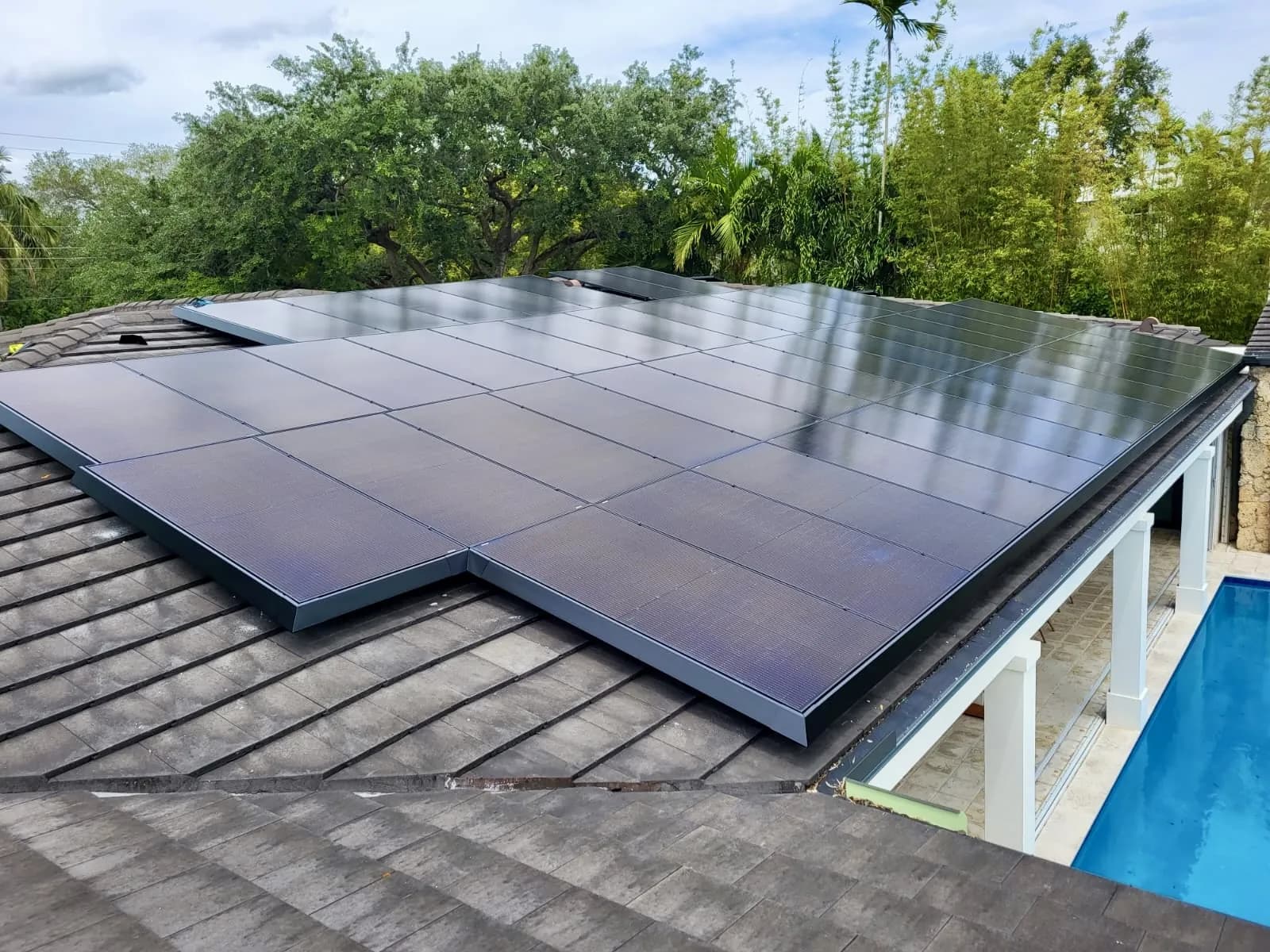
Sprightful Solar 32.6 kW solar system installed on a home in Coral Gables, Florida

32.6 kW rooftop array in Coral Gables, FL · 74 modules · standoffs anchored with stainless-steel bolts directly into the roof trusses.

At a glance

Project ledger

CountyMiami-Dade County
Permitting authorityCoral Gables
EnergizedMay 2023
Permit → energize236 days
System size32.6 kW
Modules74 panels
InverterIQ 8M
BatteryNot included
Annual production (est.)48,900 kWh
30-yr lifetime savings (est.)$348,966

Hardware

What was installed, and why.

  • Modules — 74× panels

    DNA-144-BF26-440 440W. Sized to cover the home's 12-month baseline load with a minor buffer for future electrification.

  • Inverter — IQ 8M

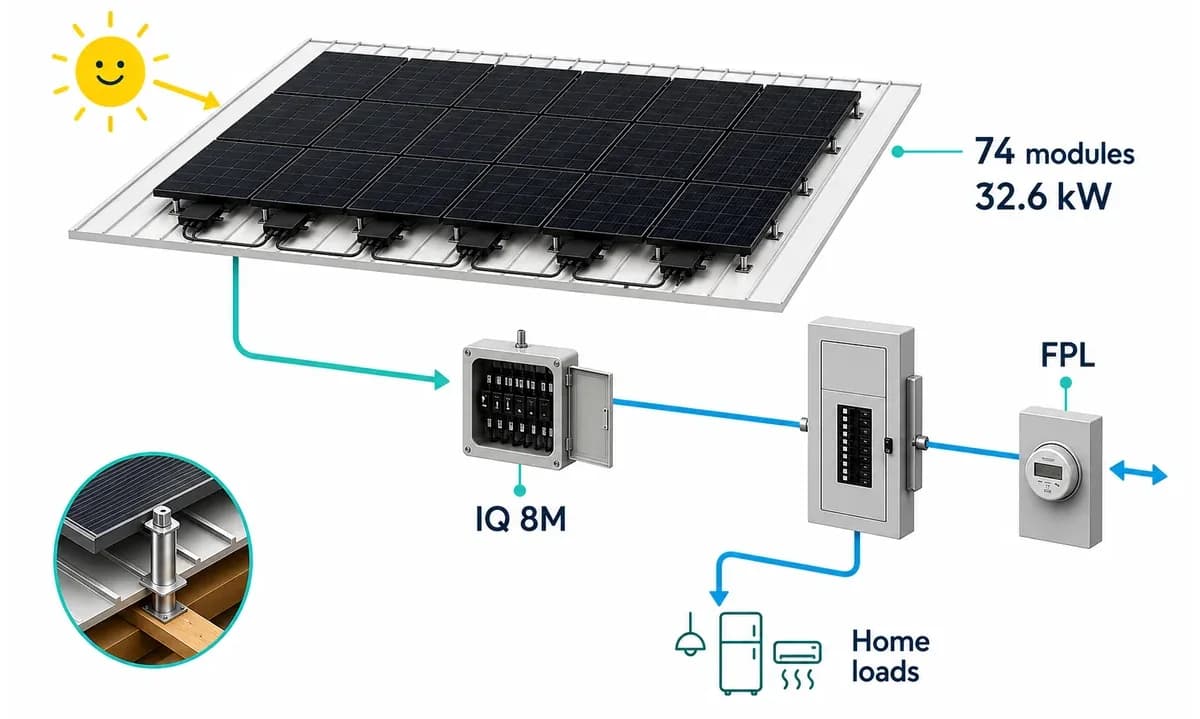
    Grid-tied inverter equipment converts rooftop production for home loads and FPL net metering.

  • Racking — mounting system

    Standoffs anchored with stainless-steel bolts directly into the roof trusses

Equipment diagram showing the Coral Gables solar system hardware and utility connection

Project timeline

How the Coral Gables project moved from contract to meter.

A dated view of the work: contract, permitting, on-site installation, utility handoff, and any later expansion or battery phases.

01

Start

Project begins

September 8, 2022Day 0
02

Milestone

Permits submitted to city

Day 15
03

Install

Installation begins

December 27, 2022Day 110
04

Install

Installation completed

Day 114
05

Milestone

FPL replaces meter

May 2, 2023Day 236
Total span
236 days contract to energized
vs. Florida average
~425 days · ~44% faster

Project notes

About the project

A 74-panel, 32.6 kW rooftop array is on the upper end of what Sprightful installs on a single-family home. This Coral Gables residence has the roof area, the consumption profile, and the aesthetic standards to justify it — and the array had to look like it belonged on a Gables rooftop rather than a commercial warehouse.

Sprightful designed the layout around the home's distinctive rooflines, using Jinko's bifacial 440-watt DNA modules paired one-for-one with Enphase IQ 8M microinverters. Bifacial modules capture light reflected off the roof surface in addition to direct sunlight, squeezing extra production out of every square foot — which matters when you're trying to max out rooftop generation without adding a visible second array. The end result is a clean, rectilinear 74-panel layout that disappears into the Spanish architecture from street level.

To finish the look, we wrapped the entire array with perimeter solar skirts — aluminum trim that closes the ~5-inch gap between the module frames and the tile roof below. Skirts do three things at once: they hide the visual "gap" that makes most rooftop PV look tacked on, they keep leaves, debris, and wildlife (squirrels and nesting birds are persistent under panels in SoFlo) from getting underneath the array, and they turn a collection of rectangular modules into a single clean architectural element. Sprightful reserves skirts for our highest-end residential installs — the labor and material cost adds meaningfully to the install — but on projects like this one, where the array has to look like it belongs on the home rather than be attached to it, they're the finishing touch that makes the system feel designed rather than installed.

Why it matters

A 30-year financial and environmental decision.

These aren't projections pulled from thin air. FRCC eGRID emissions data, current FPL residential tariff, and modeled production under South Florida irradiance (~1,500 kWh/kW/yr).

48,900
kWh produced annually (estimated)
$348,966
30-year savings vs. staying on grid-only power
577tons
CO₂ offset over lifetime — equivalent to ~9,617 trees planted
Cumulative savings vs. grid-only30-year horizon
$0$174k$349k-$61kBreakeven · year 5Yr 0Yr 10Yr 20Yr 30

Good-faith estimates using FRCC eGRID emissions data, current FPL tariff, and Aurora-modeled production. Actual results vary with shading, weather, and future rate changes.

We've had solar for 2 years now. We got many quotes, but all the "salesy" salespeople turned us off from solar. Pablo and Andrea were both very responsive to my messages. Not pushy, straight to the point, extremely knowledgeable. There were some delays before installation, but that's pretty typical with our building department. The Sprightful team delivered! Our system has produced about 1,000 kWh more than the original estimate. I'm a happy customer!

Coral Gables homeowner·Solar Reviews review

More in Miami-Dade County

Nearby Sprightful installs.

Each AHJ has its own quirks — permit fees, setback rules, wind-load calcs. Here are similar projects we've run through the same county offices, close to Coral Gables.

FAQ

Solar in Coral Gables, FL.

How long does the solar permit process take in Coral Gables?

Coral Gables took 95 days from submittal to approval on this project. Typical range we've seen is 2–8 weeks depending on whether the roof assembly requires a secondary wind-load review.

What size solar system is typical for a Coral Gables home?

Most Coral Gables homeowners land between 8–16 kW — sized to offset 90–100% of their FPL bill. This project is 32.6 kW, on the larger end.

Does my HOA need to approve it?

Florida's Solar Rights Act (§163.04) prevents HOAs from outright banning rooftop solar. They can make reasonable aesthetic requests — we handle the HOA submittal directly and have a 100% approval rate to date.

What rebates and incentives are available in Miami-Dade County?

The 30% federal Investment Tax Credit (ITC) is the primary incentive — Florida has no state-level solar rebate. There's also no property tax increase for the added home value (Florida exemption), and no sales tax on the equipment.

Solar in Coral Gables? Start with your roof.

Understand your roof's solar potential — no calls, no hassle, no obligation.