18 kW Solar in Miami, FL

A 18 kW rooftop solar system designed, permitted, and installed by Sprightful for Miami homeowners. Energized March 2023.

System size
18kW
41 modules
Permit → energize
297days
52d in permitting
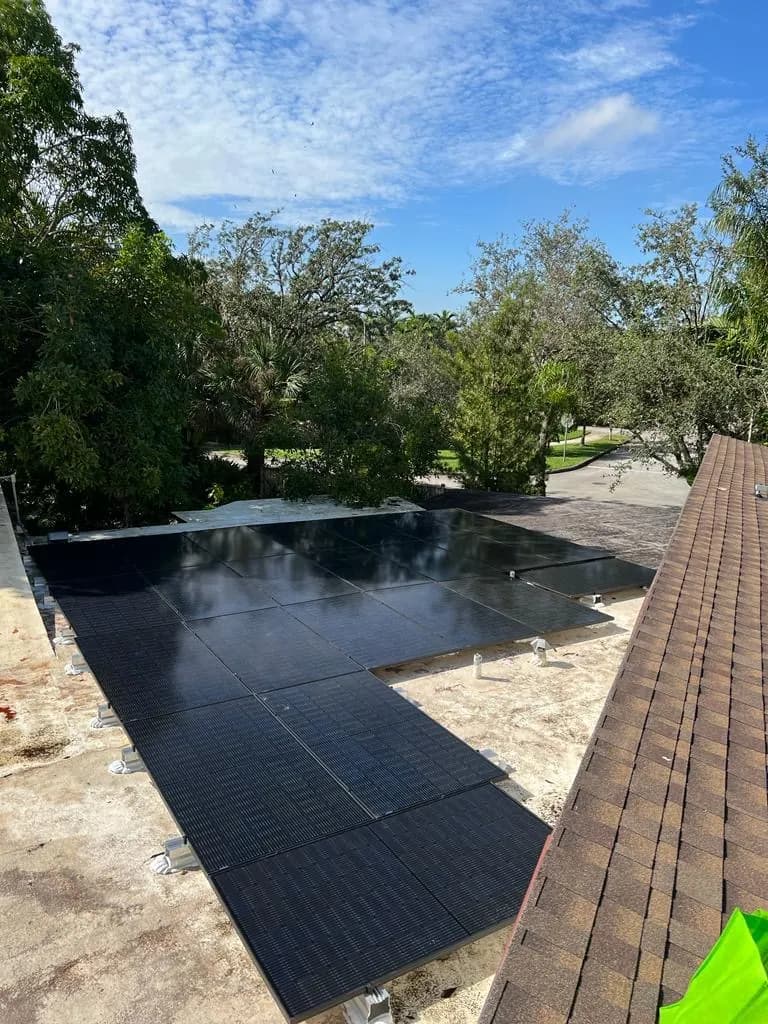
Sprightful Solar 18 kW solar system installed on a home in Miami, Florida

18 kW rooftop array in Miami, FL · 41 modules · mixed — flat-roof ballast + shingle-roof IronRidge FlashFoot 2.

At a glance

Project ledger

CountyMiami-Dade County
Permitting authoritySouth Miami
EnergizedMarch 2023
Permit → energize297 days
System size18 kW
Modules41 panels
InverterIQ 8+
BatteryNot included
Annual production (est.)27,000 kWh
30-yr lifetime savings (est.)$192,680

Hardware

What was installed, and why.

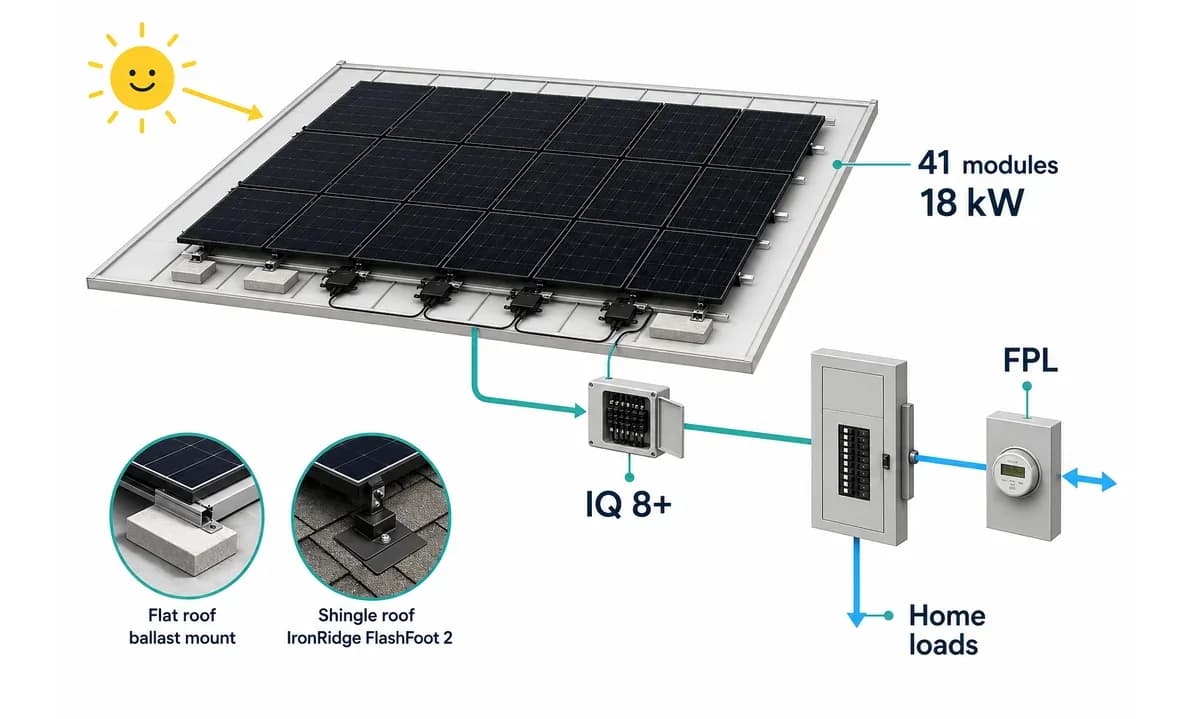
  • Modules — 41× panels

    CS3N-390MS. Sized to cover the home's 12-month baseline load with a minor buffer for future electrification.

  • Inverter — IQ 8+

    Grid-tied inverter equipment converts rooftop production for home loads and FPL net metering.

  • Racking — mounting system

    Mixed — flat-roof ballast + shingle-roof IronRidge FlashFoot 2

Equipment diagram showing the Miami solar system hardware and utility connection

Project timeline

How the Miami project moved from contract to meter.

A dated view of the work: contract, permitting, on-site installation, utility handoff, and any later expansion or battery phases.

01

Start

Project begins

May 10, 2022Day 0
02

Milestone

Permits submitted to city

Day 42
03

Install

Installation begins

August 12, 2022Day 94
04

Install

Installation completed

Day 96
05

Milestone

FPL replaces meter

March 3, 2023Day 297
Total span
297 days contract to energized
vs. Florida average
~535 days · ~44% faster

Project notes

About the project

This South Miami home has two different roof types — a flat section over the main living area and a shingled pitch over the rest. Most solar shops will quote one or the other and call it a day, but that ignores where the best sun actually falls on the house. Sprightful designed a 41-panel layout that spans both sections, using non-penetrating ballasted anchors on the flat roof and IronRidge FlashFoot 2 mounts on the asphalt shingle, so the single 18 kW array behaves like one system even though it lives on two surfaces.

Every panel is paired with an Enphase IQ 8+ microinverter, which means one shaded corner or debris-covered panel doesn't clip the whole roof. The homeowners get panel-level production data in their phone — useful in a two-roof install where production patterns change throughout the day as the sun crosses between the two surfaces.

Why it matters

A 30-year financial and environmental decision.

These aren't projections pulled from thin air. FRCC eGRID emissions data, current FPL residential tariff, and modeled production under South Florida irradiance (~1,500 kWh/kW/yr).

27,000
kWh produced annually (estimated)
$192,680
30-year savings vs. staying on grid-only power
318tons
CO₂ offset over lifetime — equivalent to ~5,300 trees planted
Cumulative savings vs. grid-only30-year horizon
$0$96k$193k-$34kBreakeven · year 5Yr 0Yr 10Yr 20Yr 30

Good-faith estimates using FRCC eGRID emissions data, current FPL tariff, and Aurora-modeled production. Actual results vary with shading, weather, and future rate changes.

Sprightful is an amazing company. The installation process was smooth and flawless from beginning to end. All of the folks in the company are a joy to work with.

Miami homeowner·Energysage review

FAQ

Solar in Miami, FL.

How long does the solar permit process take in Miami?

South Miami took 52 days from submittal to approval on this project. Typical range we've seen is 2–8 weeks depending on whether the roof assembly requires a secondary wind-load review.

What size solar system is typical for a Miami home?

Most Miami homeowners land between 8–16 kW — sized to offset 90–100% of their FPL bill. This project is 18 kW, on the larger end.

Does my HOA need to approve it?

Florida's Solar Rights Act (§163.04) prevents HOAs from outright banning rooftop solar. They can make reasonable aesthetic requests — we handle the HOA submittal directly and have a 100% approval rate to date.

What rebates and incentives are available in Miami-Dade County?

The 30% federal Investment Tax Credit (ITC) is the primary incentive — Florida has no state-level solar rebate. There's also no property tax increase for the added home value (Florida exemption), and no sales tax on the equipment.

Solar in Miami? Start with your roof.

Understand your roof's solar potential — no calls, no hassle, no obligation.